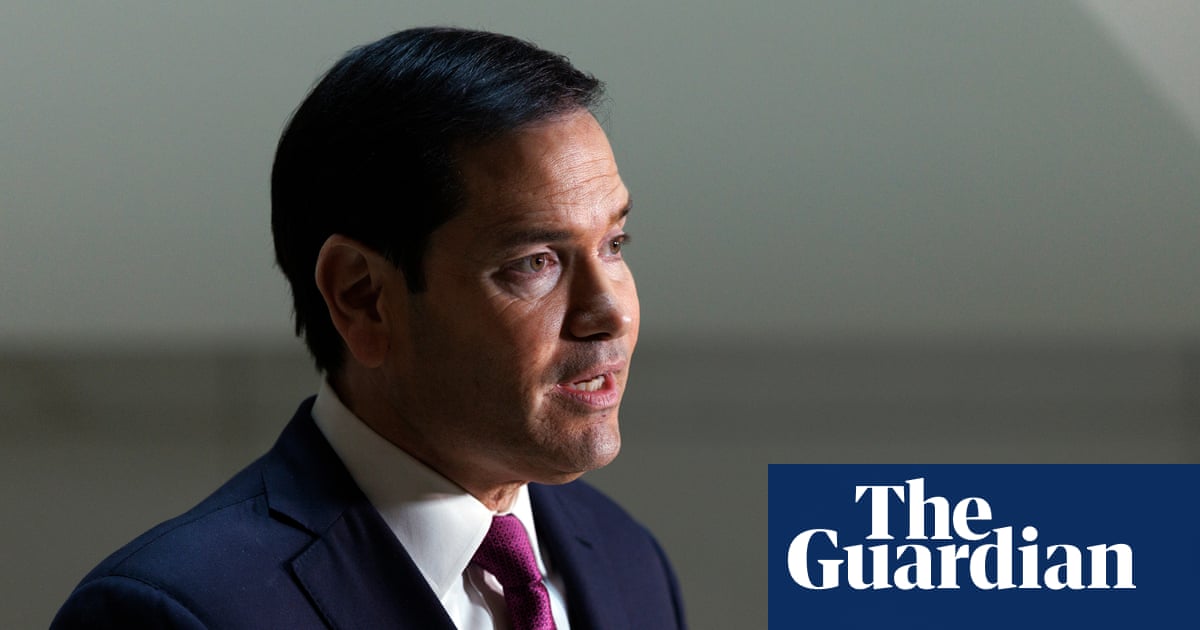
Rubio's Shifting Sands: Unpacking the US Iran Strikes and the "Rubio Israel Divide"
The geopolitical landscape of the Middle East is perpetually complex, but few events generate as much scrutiny and confusion as military action involving the United States, Iran, and Israel. A prime example emerged following US strikes on Iran, where explanations from the Trump administration, particularly those offered by then-Secretary of State Marco Rubio, evolved rapidly, creating a discernible "rubio israel divide" in the official narrative. This article delves into the various justifications presented, examines the points of contradiction, and explores the broader implications for US foreign policy and public trust.
The Initial Justification: Imminent Threat and Israeli Action
When the United States launched military action against Iran, the immediate demand from Congress and the public was for a clear rationale. Initially, Secretary of State Marco Rubio stepped forward with a detailed explanation centered on an "imminent threat." Speaking to reporters and later briefing congressional leaders, Rubio asserted that the US knew Iran would retaliate against American forces if attacked, particularly by Israel. This formed the cornerstone of his argument for a preemptive strike.
Rubio stated unequivocally, "There absolutely was an imminent threat. And the imminent threat was that we knew that if Iran was attacked, and we believed they would be attacked, that they would immediately come after us, and we were not going to sit, sit there and absorb a blow before we respond." His logic suggested a calculated move: the US, aware of an impending Israeli strike against Iran, preemptively struck Iranian targets to mitigate what it perceived as an automatic and devastating Iranian counterattack against American interests. He even claimed that Iran's retaliation mechanisms were so advanced that orders had been "delegated down to the field commanders," making a response "automatic" and "prepositioned" missiles ready to strike. The core message was clear: the US acted to save American lives, knowing that an Israeli action would trigger a response targeting US forces. While denying that Israel "forced the U.S. hand," Rubio clearly linked the timing and necessity of the US operation to anticipated Israeli activity. For a deeper dive into this specific aspect, you can read more about
Rubio's Iran Rationale: Imminent Threat vs. Israeli Attack Link.
This narrative positioned the US as proactively defending its assets, rather than initiating an unprovoked attack. House Speaker Mike Johnson echoed this sentiment, emphasizing that the "consequences of inaction" would have been "devastating." The explanation aimed to justify a significant military escalation by highlighting an unavoidable danger to US personnel and interests, directly tied to the regional dynamics involving Israel.
The Narrative Shift: Trump's Intervention and the "Rubio Israel Divide"
However, the administration's unified front quickly began to fracture, revealing a distinct "rubio israel divide" in the official messaging. Just 48 hours after Rubio's initial detailed explanation, President Trump presented a starkly different account. Appearing in the Oval Office, Trump explicitly rejected the notion that Israel had pressured his administration or that the US response was merely a reaction to anticipated Israeli action. Instead, Trump asserted a more proactive stance, declaring, "If anything, I might have forced Israel’s hand." He went on to state his belief that Iran itself was about to strike first. "It was my opinion that they were going to attack first… They were going to attack if we didn’t do it."
This presidential statement directly contradicted the foundational premise of Rubio's initial justification. Where Rubio portrayed the US as preempting Iranian retaliation *for an Israeli attack*, Trump suggested the US acted independently, perhaps even *influencing* Israel, because Iran was preparing its own initial assault. This shift immediately put Rubio in an awkward position. When confronted by a reporter summarizing his earlier comments, Rubio reportedly retorted, "No. Your statement is false,” effectively walking back his own previous detailed explanation. This abrupt revision underscored the internal tension and the lack of a cohesive narrative at the highest levels of government. The mixed messages left lawmakers, allies, and the public grappling with the true catalyst for the military action, raising serious questions about the administration's transparency and the veracity of its claims. Understanding how these conflicting narratives played out is crucial, especially when considering
Rubio's Iran Justification: Did Israel Force US Hand?
Analyzing the Contradictions and Their Impact
The "rubio israel divide" in the administration's explanations carries significant weight, impacting several critical areas:
*
Credibility and Trust: Consistent and verifiable explanations are paramount for maintaining public and international trust, especially during military engagements. When official justifications shift so dramatically within days, it erodes confidence in the administration's honesty and the intelligence assessments upon which decisions are based.
*
Congressional Oversight: Congress plays a crucial role in overseeing military actions. Conflicting rationales make it exceedingly difficult for lawmakers to perform their duties, understand the legal basis for engagement, and provide informed consent or challenge decisions. The Gang of 8 briefing Rubio conducted becomes less impactful if the foundational narrative changes shortly thereafter.
*
Allied Relations: Allies rely on clear communication from the US, especially concerning actions in volatile regions. Inconsistent messaging can sow doubt, complicate coordinated responses, and potentially strain diplomatic ties.
*
Strategic Messaging: The way a military action is justified frames its legitimacy and sets expectations for future engagement. A muddled message can be exploited by adversaries and create confusion about long-term strategic objectives.
The differing accounts highlight the immense pressure on political figures during crises and the challenge of managing complex geopolitical narratives. Was Rubio's initial explanation an attempt to contextualize a difficult situation, or was Trump's intervention a reassertion of presidential prerogative to control the narrative? Both interpretations suggest a disconnect, regardless of the underlying truth.
Implications for US Foreign Policy and Public Perception
The episode involving Rubio's shifting explanations and Trump's contrasting take offers several insights into the conduct of US foreign policy. Firstly, it underscores the importance of a unified message from an administration, particularly concerning matters of war and peace. Lack of coherence not only confuses the public but can also project an image of indecisiveness or internal conflict to international adversaries and allies alike.
Secondly, it illustrates the delicate balance between transparency and strategic necessity. While there is a legitimate need to protect sensitive intelligence, the public and Congress require sufficient information to understand and legitimize military actions. When the reasoning behind such actions changes, it invites skepticism and demands for greater accountability.
Finally, the "rubio israel divide" touches on the nuanced relationship between the US and Israel. The question of whether Israel "forced the hand" of the US, or if the US "might have forced Israel's hand," is not merely semantic. It speaks to the autonomy of US foreign policy and the extent of influence that a key ally can exert. Asserting US independent action reinforces sovereignty, while implying compulsion by an ally can raise domestic political concerns and international perceptions of leadership.
Conclusion
The unfolding drama surrounding Marco Rubio's explanations for US strikes on Iran, juxtaposed with President Trump's differing account, serves as a significant case study in political communication during a crisis. The evolution of the narrative from an "imminent threat" stemming from anticipated Israeli action to a more proactive stance by the US, potentially influencing Israel, created a notable "rubio israel divide." This divergence not only confused lawmakers and the public but also raised profound questions about transparency, credibility, and the dynamics of US foreign policy in a highly volatile region. Ultimately, the incident underscores the critical need for consistent and clear justifications when engaging in military action, both for domestic trust and international standing.