Rubio's Iran Rationale: Navigating the Divide Between Imminent Threat and Israeli Action
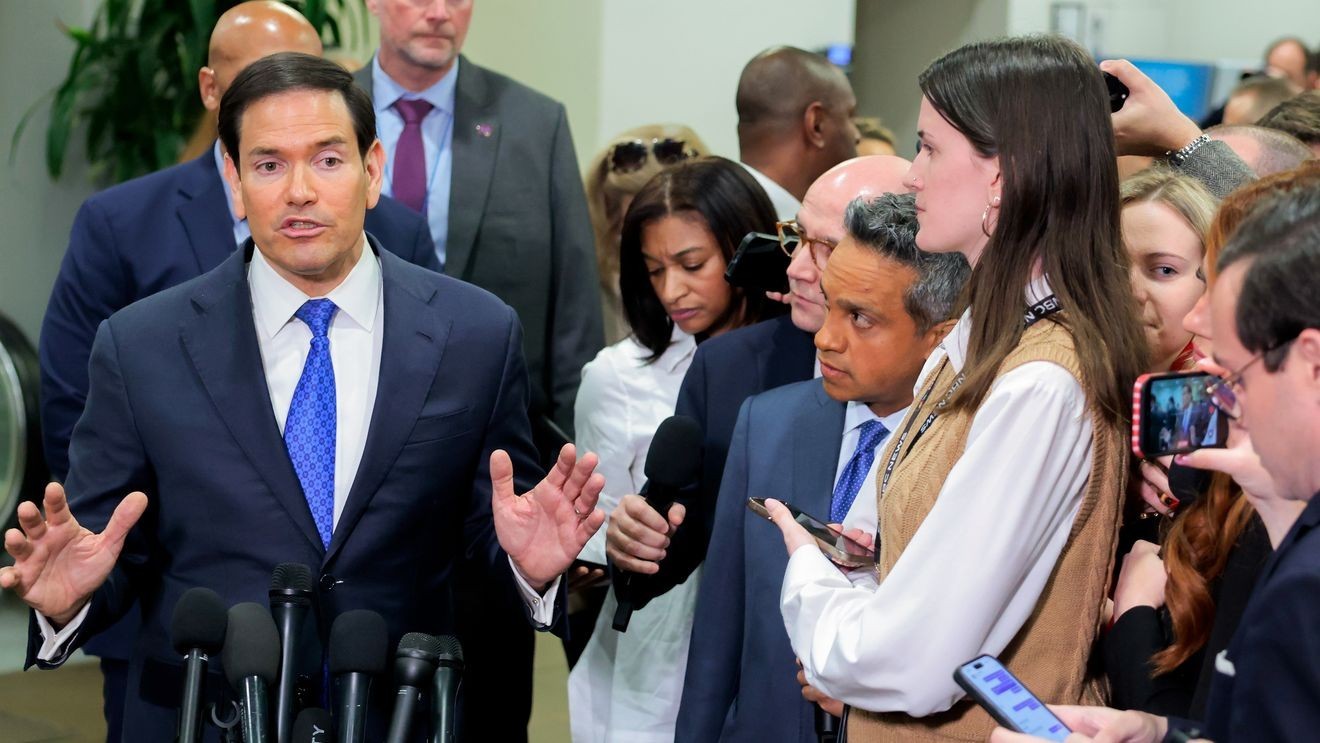
In the complex theater of international relations, explanations for military action are rarely simple, and often subject to intense scrutiny. This was certainly the case when Senator Marco Rubio, a key voice in the Trump administration's foreign policy discussions, offered varying justifications for US strikes against Iran. His initial rationale centered on an "imminent threat" linked to potential Iranian retaliation for an anticipated Israeli attack, only to later shift, creating a significant rubio israel divide in the administration's public narrative. Understanding this evolving explanation is crucial to grasping the intricate dynamics of US foreign policy in the Middle East and the challenges of communicating national security decisions.
Unpacking Rubio's Initial Rationale: The "Imminent Threat" Defined
Initially, Senator Rubio presented a striking justification for the US military action against Iran. Speaking to reporters and congressional leaders, he asserted that the threat posed by Iran was "imminent." This imminence, however, wasn't framed as Iran preparing an unprovoked first strike, but rather as a certainty of Iranian retaliation against US forces if Iran itself were attacked—specifically, if it were attacked by Israel. Rubio painted a picture of an almost automatic response from Tehran, stating, "It was abundantly clear that if Iran came under attack by anyone — the United States or Israel or anyone — they were going to respond, and respond against the United States. The orders had been delegated down to the field commanders. It was automatic."
This perspective suggested a preemptive strike was necessary to mitigate American casualties. Rubio claimed that the US knew Iran had "prepositioned" missiles and that waiting for Iran's retaliatory strike to materialize would lead to "much higher casualties" for American forces. Essentially, the US acted not to initiate conflict, but to preemptively defend against an inevitable counterattack triggered by an external (specifically Israeli) action. This rationale redefined the traditional understanding of an "imminent threat" – shifting it from an immediate, unprovoked attack to a guaranteed, severe response to an expected future event.
- Key takeaway: The initial argument hinged on predicting Iran's automatic and severe response to an attack, which necessitated a US preemption to protect its forces.
- Insight: This interpretation of "imminent threat" broadens its scope, potentially allowing for preemption based on anticipated reactions rather than direct, immediate aggression.
The Israeli Factor: A Catalyst or Coincidence?
A central tenet of Rubio's initial explanation was the explicit link between the US strikes and a foreknowledge of an impending Israeli action against Iran. He stated, "We knew that there was going to be an Israeli action. We knew that that would precipitate an attack against American forces, and we knew that if we didn't preemptively go after them before they launched those attacks, we would suffer higher casualties." This connection positioned the US action as a direct consequence, or at least a highly influenced one, of Israel's anticipated move. House Speaker Mike Johnson also seemed to back this view, suggesting "the consequences of inaction on our part could have been devastating" if the US didn't strike alongside Israel.
However, Rubio was quick to deny that Israel had "forced the U.S. hand." He maintained that while the Israeli strike was a factor in the timing ("That's the question of why now"), the US military action was ultimately necessary irrespective of Israel's plans. "No matter what, ultimately, this operation needed to happen," he asserted. This created an initial subtlety within his own statement: acknowledging the Israeli link as a timing mechanism, but downplaying it as the ultimate determinant of US necessity. This nuanced position already hinted at a potential rubio israel divide in the administration's messaging, attempting to reconcile a direct causal link with independent agency.
- Fact: The close coordination and intelligence sharing between the US and Israel are well-documented, making such a scenario plausible, but the extent of influence remains contentious.
- Analysis: The denial of Israel "forcing" the US hand is critical for maintaining American sovereignty in decision-making, even when acknowledging the strategic interplay with allies.
The Shifting Sands of Explanation: A Deeper Dive into the Rubio-Trump Divergence
The clarity, or lack thereof, surrounding the US strikes against Iran quickly became muddled. Within 48 hours of Rubio's initial statements, the narrative began to unravel, creating a significant public and political rubio israel divide. On Tuesday, Secretary Rubio found himself correcting a reporter who summarized his earlier comments regarding Israel's influence on the timing of US strikes. "No. Your statement is false," he retorted, attempting to walk back the suggestion that Israeli plans had guided the US decision-making.
Even more impactful was President Trump's subsequent intervention. Speaking from the Oval Office, Trump effectively rewrote the script, emphatically rejecting any notion of Israeli pressure. "If anything, I might have forced Israel’s hand," he declared, adding a layer of complexity and contradiction. Trump's explanation pivoted to asserting his belief that Iran itself was on the verge of launching an attack. "It was my opinion that they were going to attack first… They were going to attack if we didn’t do it." This presidential statement directly contradicted Rubio's initial emphasis on an Israeli catalyst, presenting an alternative "imminent threat" rooted in direct Iranian aggression, not retaliation for another party's action. This clear divergence left lawmakers and allies grappling with conflicting rationales, highlighting the challenges of a unified message during a crisis. For further insights into these shifting explanations, you might find our article US Iran Strikes: Rubio's Shifting Explanations & Trump's Take particularly informative.
- Tip: In high-stakes foreign policy, consistency in messaging from top officials is paramount for maintaining credibility and clarity.
- Insight: The President's assertion of "forcing Israel's hand" is a powerful statement of US leadership and aims to dispel any perception of being led by an ally.
Why the Discrepancy Matters: Implications for Policy and Trust
The evolving and often contradictory explanations for the strikes against Iran carried significant implications. First, for congressional oversight, particularly the "Gang of 8" leaders briefed by Rubio, the shifting narratives made it difficult to assess the administration's strategic objectives and the legal basis for military action. Lawmakers require clear, consistent justifications to fulfill their constitutional duties of oversight and to ensure public accountability.
Second, the mixed messages impact the trust of international allies and the public. In a volatile region, reliable communication from a global power like the United States is essential for stability. When the rationale for military action appears to change rapidly, it can breed uncertainty, fuel skepticism, and complicate diplomatic efforts. Allies like Israel, whose actions were initially cited as a significant factor, might also face questions regarding their coordination and influence over US policy. The confusion surrounding the administration's explanations for military action raised fundamental questions about the transparency and coherence of US foreign policy decision-making, as explored further in Rubio's Iran Justification: Did Israel Force US Hand?.
- Practical Advice: Governments should strive for clear, consistent, and transparent communication, especially in matters of national security, to maintain domestic and international confidence.
- Analysis: The legal definition of "imminent threat" is often debated, and inconsistent explanations can undermine the legal justification for military action under both domestic and international law.
Conclusion
The discussion surrounding Marco Rubio's explanations for US strikes against Iran, particularly the evolving link to potential Israeli action, serves as a compelling case study in the complexities of foreign policy communication. From an initial focus on an "imminent threat" triggered by anticipated Israeli actions and subsequent Iranian retaliation, the narrative shifted, with President Trump offering a different emphasis on direct Iranian aggression. This rubio israel divide in explanations highlights the inherent challenges in presenting a unified front during a crisis, the political pressures that shape public statements, and the critical importance of transparent and consistent messaging for maintaining public trust and international credibility. As nations navigate increasingly intricate geopolitical landscapes, the clarity and coherence of their stated rationales for military engagement will remain under intense scrutiny.